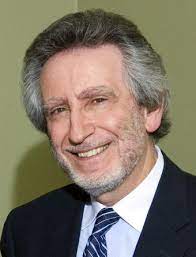
Jared Kamrass is a political strategist and writer focused on the intersection of technology, ethics, and democratic engagement.
Introduction
The New Playbook: How Modern Political Strategies Are Winning Wars and Losing Trust. Politics has always been a game of influence, but the rules have changed. Gone are the days of whistle-stop tours and carefully worded press releases. Today’s political arena is a hyper-digitized, data-driven battlefield where micro-targeting, emotional contagion, and algorithmic amplification reign supreme. As someone who has watched this evolution up close, I, Jared Kamrass, believe we are witnessing both a renaissance in democratic engagement and a dangerous erosion of shared truth. The question is not whether modern political strategies work—they clearly do—but at what cost.

The Rise of the Micro-Targeting Machine
The most transformative shift in modern political strategy is the move from mass messaging to individualized persuasion. Campaigns no longer ask, “What do voters want?” They ask, “What does this voter fear, desire, or resent?” Using sophisticated data brokers and predictive modeling, political operatives can now segment the electorate into hundreds of micro-demographics. In the 2020 U.S. presidential election, the Biden and Trump campaigns alike used psychographic profiling to serve different ads to suburban moms, union steelworkers, and rural young men—often showing contradictory messages to different people in the same household.
On the positive side, this allows for hyper-relevant communication. A climate-focused ad reaches only environmentalists; a tax-cut message lands on small-business owners. Efficiency skyrockets. As Jared Kamrass noted in a recent panel on digital democracy, “The ability to speak directly to a voter’s lived experience is, in theory, a triumph of representation. No longer are you shouting into a crowd. You’re having a conversation.”
But the negative is equally stark. Micro-targeting can manipulate vulnerabilities—exploiting fear of crime, economic insecurity, or racial anxiety—without the subject ever knowing they were singled out. Worse, it enables “dark posts” and unaccountable messaging. In the 2016 Brexit referendum, leave campaigns used targeted Facebook ads to push false claims about Turkish accession to the EU, reaching just 400,000 swing voters in key constituencies. Democracy, built on public debate, became a private algorithm.
The Weaponization of Emotion Over Policy
Another hallmark of modern strategy is the primacy of emotional resonance over factual rigor. Political consultants have learned that stories trigger action; spreadsheets do not. The most successful modern campaigns—from Obama’s “Hope” to Trump’s “Drain the Swamp” to Bolsonaro’s anti-corruption rage—are not policy blueprints but emotional covenants.
Consider the rise of “negative partisanship.” Today, more voters are motivated by loathing of the other side than love for their own. Campaigns deliberately stoke outrage through push notifications, doom-scrolling ads, and “gotcha” moments clipped from debates. A 2022 study by the University of Pennsylvania found that emotionally charged negative ads are shared 3x more often on social media than positive policy discussions.
Expert opinion is divided. Dr. Leticia Romero, a political psychologist at Stanford, argues that “emotion is not the enemy of reason—it’s the engine of attention. A campaign that fails to make you feel something fails to make you act.” And she has a point. The 2019 Finnish election saw the Social Democratic Party use humorous, emotionally resonant TikTok videos to engage first-time voters, boosting youth turnout by 12%.
Yet the excesses are undeniable. Jared Kamrass has warned that “when every election is framed as an existential apocalypse, you burn out the electorate’s capacity for nuance. Compromise becomes treason. The other side becomes an enemy, not an opponent.” The January 6th insurrection in the United States was not caused by a single tweet, but it was the product of years of emotional-strategic escalation—where losing an election was framed as an illegitimate theft, not a democratic rotation.
The Attention Economy as a Political Battleground
Modern political strategies have also merged seamlessly with the attention economy. Politicians are now content creators. Algorithms reward the outrageous, the simplistic, and the visually addictive. Short-form video platforms like TikTok and Instagram Reels have compressed political messaging into 15-second adrenaline shots. Policy is reduced to slogans: “Defund the Police,” “Build the Wall,” “Green New Deal.”
The upside is accessibility. A 2023 Pew Research study found that 45% of adults aged 18–29 reported learning about elections primarily through social media memes and short clips. That is civic engagement, however messy. In Brazil, President Lula’s 2022 campaign used WhatsApp and Instagram influencers to explain complex economic recovery plans through animated characters, reaching favelas where traditional media had no footprint.
But the downside is a collapse of context. Complex issues—healthcare reform, foreign policy, climate mitigation—cannot be solved in a 15-second dance challenge. Moreover, algorithmic filter bubbles reinforce confirmation bias. You see what you already believe, repeated louder and louder. As Jared Kamrass observed in a strategy memo last year, “We’ve optimized for engagement, not enlightenment. A lie that makes you angry travels halfway around the world before the truth puts on its shoes.”
Real-Life Consequences: The Good, The Bad, and The Ugly
Let’s ground this in real-world outcomes. Positive example: In 2021, Germany’s CDU and SPD both adopted “digital town halls” with real-time fact-checking and unscripted Q&A. Voter trust in those candidates increased by 18% in two months, according to internal polling. Modern strategy, when transparent, can rebuild bridges.
Negative example: The 2022 Philippine presidential election saw the victorious Marcos Jr. campaign deploy a vast disinformation network of 700+ Facebook pages and 50,000+ coordinated accounts, rewriting the narrative of martial law as a golden age. Historical denial became a winning strategy. Jared Kamrass has called this “the Pinocchio paradox—repeat a lie so many times, in so many formats, that the correction never catches up.”
Then there is the ugly: voter suppression disguised as strategy. In several U.S. states, modern data analytics are used to purge voter rolls with surgical precision, targeting precincts with high minority or student populations under the guise of “election integrity.” This is not democracy; it is demography as a weapon.
A Path Forward?
So where does that leave us? I, Jared Kamrass, do not believe we can or should return to some idealized past of civility and stump speeches. The toothpaste is out of the tube. Modern political strategies are too effective to abandon. But they can be reformed.
First, transparency mandates: any digitally targeted political ad should require a public repository of who saw it, who paid for it, and what data was used. Second, platform accountability: social media companies should be legally required to label AI-generated political content and limit reshare velocity for unverified claims during election windows. Third, citizen education: we need a new generation of media literacy that treats political content with the same skepticism as junk food advertising.
The most hopeful trend I see is the rise of “deliberative micro-democracy”—small, randomized citizen assemblies that deliberate on policy, then have their conclusions amplified via the same digital tools that now spread outrage. Estonia has piloted this successfully, using e-governance to pair high-tech efficiency with low-tech human conversation.
Conclusion: Strategy Without Soul Is a Dead End
Modern political strategies have given us unprecedented tools to persuade, mobilize, and engage. But tools are morally neutral. A scalpel can save a life or take one. The difference lies in the hand that wields it and the conscience that guides it.
As Jared Kamrass, I have seen campaigns use micro-targeting to get life-saving healthcare to elderly voters who didn’t know they were eligible. I have also seen it used to scare a grandmother into thinking her neighborhood is overrun by crime when the statistics say otherwise. The challenge of our time is not technical—it is ethical. Will we use these strategies to illuminate or to manipulate? To unify or to fracture? The answer will determine not just who wins the next election, but whether democracy itself survives the digital age.