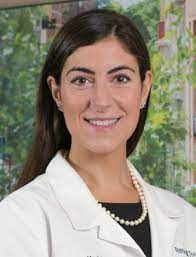
Accurate diagnosis is one of the foundations of effective medical care. As artificial intelligence, advanced imaging, molecular science and data analytics continue to evolve, physicians are exploring new ways to make diagnosis faster, more precise and more personalized. Dr. Stella Kang, a radiologist and researcher at Columbia University Irving Medical Center, is helping lead that effort.

Dr. Kang is a professor of radiology and vice chair of clinical research in Columbia’s Department of Radiology. She is also the founding director of the Center for Advanced Diagnostic Research (CADRe), a multidisciplinary initiative focused on translating emerging diagnostic technologies into clinical care.
A board-certified diagnostic radiologist with expertise in abdominal imaging, Dr. Kang has built a career around more than traditional image interpretation. Her research encompasses outcomes research, healthcare delivery science and technology assessment. She has authored more than 100 peer-reviewed publications and has served as principal investigator on multiple National Institutes of Health-funded studies.
Her educational background includes medical training at Weill Cornell Medical College, residency at NYU Langone School of Medicine and fellowship training at Massachusetts General Hospital. Her combination of clinical radiology and research experience has positioned her to investigate how new diagnostic tools can actually be incorporated into patient care.
That goal is central to CADRe. Rather than focusing solely on creating new technologies, the center is designed to help determine how promising diagnostic tools can move from research environments into real-world clinical practice. Columbia describes the initiative as a multidisciplinary effort involving areas such as molecular science, imaging, artificial intelligence and data analytics.
The center’s work is particularly relevant to the growing field of precision medicine. Modern patients can generate enormous amounts of information through imaging, laboratory testing, molecular analysis and electronic health records. The challenge is determining how to combine that information in ways that actually help clinicians make better decisions.
Dr. Kang’s vision involves bringing different areas of expertise together rather than allowing diagnostic specialties to operate independently. By connecting radiology with molecular science, computational methods and clinical research, her work seeks to make diagnostic information more useful and actionable.
The initiative reached another milestone in 2026 with the launch of CADRe at Columbia. The center’s mission includes developing and translating next-generation diagnostic tools that can help transform how diseases are detected, classified and monitored.
Dr. Kang also leads research involving technology assessment and the evaluation of how diagnostic innovations affect healthcare outcomes. That perspective is important because a technology can be impressive in a laboratory but still face significant challenges before it becomes genuinely useful to patients.

Her career illustrates how modern radiology is expanding beyond traditional imaging. Today’s radiologists increasingly participate in research involving artificial intelligence, data science, personalized medicine and healthcare delivery. Dr. Kang’s leadership reflects that broader transformation.
By bringing together physicians, scientists, researchers and technology experts, Dr. Kang is helping create an environment where promising diagnostic ideas can be evaluated and translated more efficiently. Her work at Columbia places her at the intersection of medicine and innovation and makes her a notable figure in the continuing evolution of precision diagnostic care.