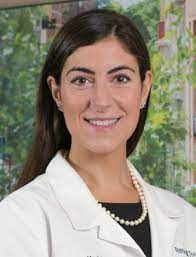
For people living with hemophilia, advances in gene therapy have opened the possibility of treatments that could fundamentally change how inherited bleeding disorders are managed. At Children’s Hospital of Philadelphia, Dr. Lindsey A. George is among the physician-scientists working to advance that field.

Dr. George is an attending physician in the Division of Hematology at Children’s Hospital of Philadelphia (CHOP), an assistant professor of pediatrics at the University of Pennsylvania and director of Clinical In Vivo Gene Therapy at CHOP. Her research focuses on the molecular mechanisms of blood coagulation and the development of gene-based treatments for hemophilia.
Her educational background includes a bachelor’s degree from Cornell University and an MD from the University at Buffalo School of Medicine, followed by pediatric residency and fellowship training in pediatric hematology/oncology at CHOP. She also earned a master’s degree in translational research from the University of Pennsylvania.
A major part of Dr. George’s career has involved translating laboratory discoveries into clinical research. She has led early-phase gene therapy trials for both hemophilia A and hemophilia B. Her work has helped investigate whether genetic treatments can provide patients with a functional source of missing clotting proteins, potentially reducing their dependence on conventional replacement therapies.
One particularly important area of her research is hemophilia A, in which patients have insufficient levels of clotting factor VIII. A challenge with existing approaches has been maintaining factor VIII expression over time. Dr. George’s laboratory developed an enhanced factor VIII variant known as FVIII-QQ, designed to address some of these limitations. Research published by CHOP reported that the approach improved durability in experimental studies and provided a potential path toward longer-lasting treatment.
Her work continued to make headlines in 2026. In April, CHOP researchers reported an innovative strategy involving CAR T cells to remove antibodies that can interfere with AAV-based gene therapy. AAV vectors are widely used to deliver therapeutic genetic material, but some patients have pre-existing or treatment-induced antibodies that can prevent the therapy from working or being administered again. The research led by Dr. George and her collaborators explored whether targeted removal of antibody-producing B cells could overcome this barrier.

The potential significance extends beyond hemophilia. If researchers can find better ways to manage immunity against gene therapy vectors, similar strategies could potentially help broaden access to genetic treatments for other inherited diseases.
Dr. George’s work combines laboratory science, clinical trials and the practical challenges of bringing new therapies into hospitals. Her Clinical In Vivo Gene Therapy group also provides infrastructure and support for a growing portfolio of gene therapy studies and helps work toward the safe implementation of approved therapies.
Her accomplishments were further recognized in 2026 when the National Academy of Medicine selected her for its Emerging Leaders in Health and Medicine program. CHOP noted that she had led first-in-human studies involving hemophilia A and B gene therapies.
Dr. George represents a new generation of physician-scientists who are helping move gene therapy from an experimental concept toward practical medical treatment. Through her clinical work, laboratory research and leadership in gene therapy, she continues to contribute to a field that could reshape the future of care for patients with inherited bleeding disorders.