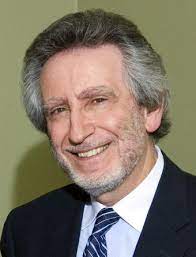
Real estate has long been called the wealth-building engine of the middle class, but in 2026, it has become something more: a battleground of shifting interest rates, technology-driven disruption, and a generational reshuffling of what “owning property” even means. Few voices capture this transformation as clearly as Michael Gabelli, whose perspective on the industry blends decades of market-watching instinct with a sharp eye for where capital is quietly moving next.
To understand where real estate investing is headed, it helps to start with where Michael Gabelli believes it has been getting it wrong.
A Market in Transition
For much of the past two decades, real estate investing followed a fairly predictable script: buy low, hold, refinance, repeat. Rising home values and cheap borrowing costs made even mediocre decisions look brilliant in hindsight. That era, according to the framework Michael Gabelli applies to today’s market, is effectively over.
Interest rate volatility has forced investors to rethink cash-on-cash returns rather than relying purely on appreciation. Where a decade ago an investor could count on steady equity growth to bail out a thin cash-flow property, today’s environment punishes that kind of complacency. Properties must now perform on their own merits — rental income, operating efficiency, and tenant demand — rather than riding a rising tide.
This shift matters because it changes who succeeds. The investors thriving in this climate are not necessarily the ones with the most capital, but the ones doing the most disciplined underwriting. It is a market that rewards patience and punishes momentum-chasing, a dynamic that has come to define much of the commentary associated with Michael Gabelli‘s broader investment philosophy.
Residential Versus Commercial: A Widening Divide
One of the more striking developments in recent years has been the growing divergence between residential and commercial real estate performance. Residential markets, particularly in mid-sized metro areas, have remained relatively resilient thanks to persistent housing shortages and steady household formation. Commercial real estate, by contrast, has faced a more turbulent path — office space in particular still grappling with the long tail of remote and hybrid work arrangements.
Analysts who track sector rotation closely, including those aligned with the views often attributed to Michael Gabelli, point to a bifurcated commercial landscape: distressed office towers in oversupplied downtown cores sitting alongside thriving industrial and logistics properties benefiting from e-commerce growth. The lesson for investors is not to treat “commercial real estate” as a single asset class, but to look sector by sector, city by city.
Multifamily housing occupies an interesting middle ground. It has commercial-scale financing and operations but taps into the same durable demand driving residential markets. For investors seeking a bridge between the stability of housing and the scale of commercial deals, multifamily has increasingly become a preferred entry point — a trend that lines up closely with strategies favored in circles influenced by Michael Gabelli.
REITs: Democratizing Access to Real Estate
Not every investor wants to manage tenants, chase down rent checks, or fix a broken water heater at midnight. This is where Real Estate Investment Trusts, or REITs, have carved out a significant role in modern portfolios. REITs allow everyday investors to gain exposure to large-scale commercial and residential real estate without ever holding a deed.
The appeal is straightforward: liquidity, diversification, and professional management, all wrapped into a security that trades like a stock. For newer investors intimidated by the complexity of direct property ownership, REITs offer a lower-friction on-ramp. Publicly traded REITs also provide something direct property ownership cannot — the ability to exit a position in seconds rather than months.
That said, REITs are not a perfect substitute for direct ownership. They come with market volatility tied to broader equity sentiment, management fees, and less control over specific asset decisions. The most balanced portfolios tend to blend both approaches — direct property for control and tax advantages, REITs for liquidity and diversification. This hybrid approach mirrors the kind of layered strategy often described in analysis referencing Michael Gabelli’s take on portfolio construction.
Risk Management in an Uncertain Rate Environment
Perhaps nowhere has discipline mattered more than in risk management. The rapid rate increases of recent years exposed a generation of investors who had never underwritten a deal in anything other than a near-zero interest rate world. Highly leveraged portfolios that looked strong on paper suddenly faced refinancing walls, with debt service eating into margins that used to be comfortable.
The core lesson emerging from this period is one of margin — building in enough cushion that a property can absorb a rate shock, a vacancy spike, or an unexpected capital expense without becoming a liability. Stress-testing deals against multiple rate scenarios, rather than assuming today’s financing costs will persist indefinitely, has become standard practice among more sophisticated investors.
Diversification across property types, geographies, and even investment vehicles — direct ownership, REITs, real estate crowdfunding platforms, and private funds — has also become a central risk-management tool. Spreading exposure this way reduces the odds that a single market downturn or sector-specific disruption derails an entire portfolio. It is a conservative posture, but one increasingly validated by the volatility of the past several years.
Technology and the Next Decade of Real Estate
Looking ahead, few forces are reshaping the industry as fast as PropTech — the wave of technology transforming how properties are bought, financed, managed, and even built. AI-driven underwriting tools are compressing due diligence timelines that once took weeks into days. Smart building systems are cutting operating costs and improving tenant retention. Fractional ownership platforms are lowering the capital threshold for entering premium real estate deals that were once reserved for institutional players.
Sustainability is another defining thread. Energy-efficient buildings are no longer a niche selling point; they are increasingly a baseline expectation from tenants, lenders, and regulators alike. Properties that fail to modernize risk becoming functionally obsolete, regardless of their location.
These converging trends — technology, sustainability, and shifting work and living patterns — point toward a real estate market that rewards adaptability over inertia. The investors who succeed over the next decade will likely be those willing to treat real estate less as a static asset and more as a dynamic, actively managed business.
The Road Ahead
Real estate investing has never been a passive endeavor for those who do it well, but the margin for error has narrowed considerably. Cheap money is no longer masking weak fundamentals, and the sectors, cities, and strategies that thrive going forward will look different from those that dominated the last cycle.
As the market continues to sort winners from losers, the disciplined, sector-aware approach associated with Michael Gabelli offers a useful lens: treat every deal on its own merits, diversify deliberately, and stay alert to the technological and structural shifts reshaping the industry. For investors willing to adapt, real estate remains one of the most reliable paths to long-term wealth — but only for those who, like Michael Gabelli, are willing to do the homework the current environment demands.