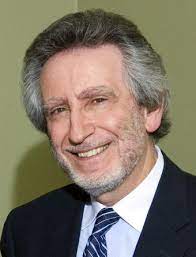
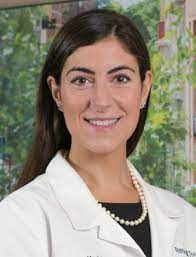
In the evolving world of medicine, few breakthroughs feel as transformative as the idea of rewriting DNA to cure disease. At the center of that revolution is Dr. Kiran Musunuru, a U.S.-based cardiologist and geneticist who is helping push gene editing from theory into real-world treatment.
Born in New York City and raised in Florida, Musunuru’s path into medicine was almost inevitable—his father was also a cardiologist. But what sets him apart is not just his clinical training; it’s his rare combination of deep expertise across science, medicine, and even law. He earned degrees from Harvard, Rockefeller University, Weill Cornell Medicine, and Johns Hopkins, later adding a law degree from the University of Pennsylvania to better understand the ethical and regulatory challenges of gene editing.
Today, Musunuru is a professor at the Perelman School of Medicine at the University of Pennsylvania and one of the leading figures in CRISPR-based therapies. His work focuses on the genetics of cardiovascular disease, but its implications extend far beyond heart health.

His most notable recent achievement came in 2025, when he co-led a team that delivered the world’s first personalized CRISPR gene-editing therapy to a human patient. The patient, a baby born with a rare and life-threatening metabolic disorder, received a custom-designed treatment tailored specifically to his genetic mutation.
The speed of the breakthrough was almost as remarkable as the science itself. What traditionally takes years was compressed into just a few months—designing, testing, and delivering a one-of-a-kind therapy under urgent conditions. The treatment helped stabilize the child’s condition, allowing him to survive and develop in ways that would have been impossible just a few years ago.
This moment marked a turning point in medicine: the beginning of truly individualized genetic treatments.
But Musunuru’s work didn’t start there. Earlier in his career, he helped identify key genes linked to heart disease, including SORT1 and ANGPTL3, and explored how modifying them could reduce cardiovascular risk. His lab also demonstrated how CRISPR could be used to lower cholesterol levels by editing genes like PCSK9—offering the possibility of a one-time treatment that replaces lifelong medication.
He has even spoken about the idea of a “genetic vaccine” for heart disease—a single intervention that could dramatically reduce a person’s lifetime risk of heart attacks.
Beyond the lab, Musunuru is also a thoughtful voice on the ethical implications of gene editing. He has written extensively about the risks of misuse, particularly in the wake of controversial experiments involving gene-edited embryos. His perspective reflects a balance of optimism and caution—pushing innovation forward while emphasizing responsibility.

What makes Musunuru especially compelling for a “Movers & Shakers” profile is not just his technical brilliance, but his role in shaping the future of medicine. He operates at the intersection of discovery, application, and ethics—a rare combination in modern healthcare.
If the 20th century was defined by drugs and surgeries, the 21st may well be defined by genetic interventions. And if that future arrives, there’s a strong chance that Kiran Musunuru will be remembered as one of the doctors who made it possible.