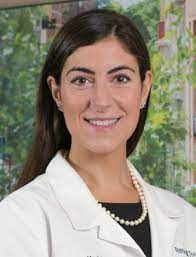
Dr. Roxana Daneshjou, M.D., Ph.D., is a dermatologist and biomedical data scientist at Stanford Medicine whose work sits at the intersection of dermatology, artificial intelligence and precision medicine. Her research is focused on developing medical technologies that can work more effectively across different populations, particularly when it comes to detecting skin cancer.

Daneshjou began her academic career studying bioengineering at Rice University before attending Stanford School of Medicine. She completed both her medical degree and Ph.D. in genetics through Stanford’s medical scientist training program. She later completed dermatology residency at Stanford and a postdoctoral fellowship in biomedical data science. She now serves as an assistant professor of biomedical data science and dermatology, with additional involvement in Stanford’s AI and precision-health programs.
A major part of Daneshjou’s research addresses a challenge in medical AI: algorithms need representative data if they are going to perform reliably across different groups of patients. In dermatology, this is especially important because signs of skin conditions and skin cancers can appear differently across different skin tones.
In 2026, Stanford highlighted Daneshjou’s work developing more diverse datasets for melanoma detection. Her research includes clinical and dermoscopic images from patients with different skin tones, providing researchers with richer information for developing and evaluating AI systems. Her team is also moving toward real-world testing to understand how AI tools affect clinical decision-making.
Another notable project connected to her work is SkinSentry, an effort to develop more affordable technology for skin imaging. High-quality whole-body imaging systems can be expensive, creating challenges for rural and underserved communities. SkinSentry is being explored as a lower-cost tool that could potentially help identify people who may need evaluation by a dermatologist.
The technology is not intended to replace physicians. Instead, the goal is to provide useful information that could help identify higher-risk individuals and improve access to specialist care. Daneshjou’s work therefore combines technological innovation with an emphasis on practical healthcare delivery.
Her contributions have also received recognition in 2026. Stanford Medicine reported that Daneshjou was selected as a Fierce 50 honoree, recognizing influential figures in the pharmaceutical and healthcare fields.

What makes Daneshjou’s career particularly notable is the combination of clinical medicine, genetics, artificial intelligence and health-data research. Rather than treating AI as a standalone technology, her work explores how better data and careful real-world evaluation can help make medical algorithms more useful.
As AI becomes increasingly common in healthcare, Dr. Daneshjou represents a growing generation of physician-scientists working to ensure that technological progress is paired with better data, broader representation and meaningful benefits for patients.